Language: 日本語版(Japanese version)
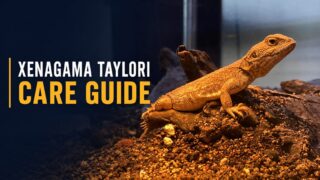
The shield-tailed agama (Xenagama taylori), also called Taylor’s shield-tailed agama or the dwarf shield-tailed agama, is still relatively uncommon in the reptile hobby. Detailed captive-breeding information can therefore be difficult to find.
I have kept this species for approximately three years and have been working on breeding it in captivity. Over the past two years, I have successfully hatched approximately 15 babies in total.
However, not every egg has hatched successfully. Most recently, all seven fertile eggs from one breeding attempt contained fully or nearly fully developed embryos that died before hatching.
This article is not intended to present a guaranteed breeding method. It is a record of the conditions and methods that have worked for me, together with the failures I am still trying to understand.
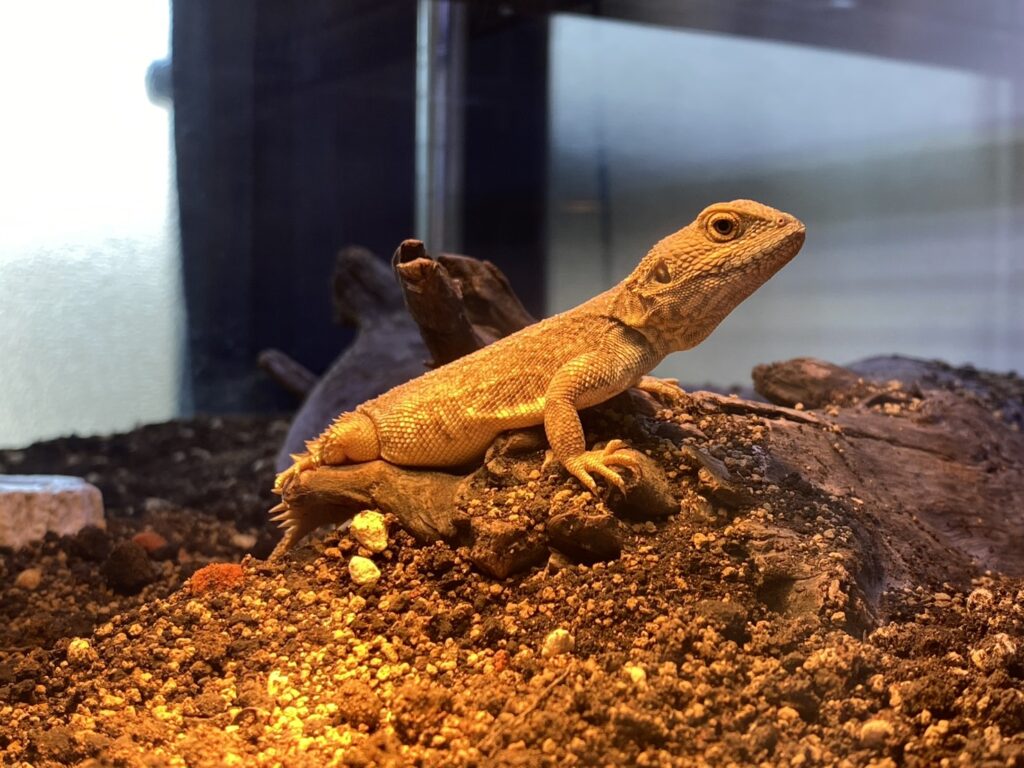
My Current Shield-Tailed Agama Group
I currently keep five Xenagama taylori:
- One adult female
- Two adult males
- One young female
- One young male
The three adults are housed in a 600 × 450 mm enclosure, approximately 23.6 × 17.7 inches.
The two younger animals are housed individually in separate 300 × 200 mm enclosures, approximately 11.8 × 7.9 inches.
This is a description of my current setup rather than a universal housing recommendation. Keepers should closely monitor animals housed together for aggression, persistent chasing, feeding competition, stress, or injuries. Each animal must be able to use the basking area and retreat from the others when necessary.
My Main Breeding Principle: Avoid Unnecessary Disturbance
My current approach to breeding can be summarized simply: provide the basic environmental conditions, observe the animals carefully, and avoid unnecessary interference.
In practice, I focus on the following:
- Maintaining appropriate temperatures and humidity
- Providing a clear thermal gradient and basking area
- Keeping compatible adult males and females together
- Avoiding unnecessary handling
- Disturbing the enclosure as little as possible outside routine feeding and maintenance
This does not mean that the animals receive no care. It means that I try to provide a stable environment without repeatedly handling them or changing their surroundings.
In my experience, stability and minimal disturbance appear to be more important than complicated breeding techniques.
Temperature and Humidity
The general daytime temperature in my enclosures varies seasonally but is usually maintained between 28 and 32°C (82–90°F).
The basking spot is kept at approximately 35°C (95°F).
Humidity is generally maintained between 50 and 60%.
I also allow the temperature to fall at night rather than maintaining the same high temperature for 24 hours. Xenagama taylori comes from an arid region of northeastern Africa where daytime and nighttime temperatures naturally differ.
I do not use a deliberate, strictly controlled cooling period to stimulate breeding. However, the temperature in my reptile room changes naturally with the Japanese seasons. This seasonal variation may provide the animals with environmental cues, although I cannot confirm that it is necessary for successful breeding.
Housing Adult Males and Females Together
My adult males and female are housed together. I rarely witness actual copulation, but the female has produced fertile eggs, so mating clearly occurs even when I do not observe it.
The enclosure includes places where the animals can move away from one another. This is especially important because courtship and chasing can place pressure on the female.
Housing multiple adults together should not be treated as completely risk-free. Behaviour and body condition must be monitored carefully, particularly when more than one male is present.
In my setup, avoiding unnecessary handling and allowing mating to occur naturally has produced fertile eggs. This is only my experience with my animals and should not be interpreted as proof that the same group composition will work in every enclosure.
Signs That Egg-Laying May Be Approaching
One of the signs I watch for is a reduction in the female’s appetite.
When a gravid female begins eating less and appears close to laying, I move her to an enclosure with a suitable nesting area. I use approximately 10 cm (4 inches) of moist soil so that she can dig and deposit her eggs.
Timing this move can be difficult. Moving the female too early may cause unnecessary stress, while moving her too late may leave her without an appropriate place to lay.
This remains one of the parts of breeding that I am still learning to judge accurately.
Clutch Size
The number of eggs has varied between clutches. In my experience, a female may lay between two and seven eggs at a time.
Because clutch size is not always the same, I do not regard any single number as standard for all females or all breeding seasons. Age, body condition, feeding, environmental conditions, and individual differences may all affect the number of eggs produced.
Collecting and Incubating the Eggs
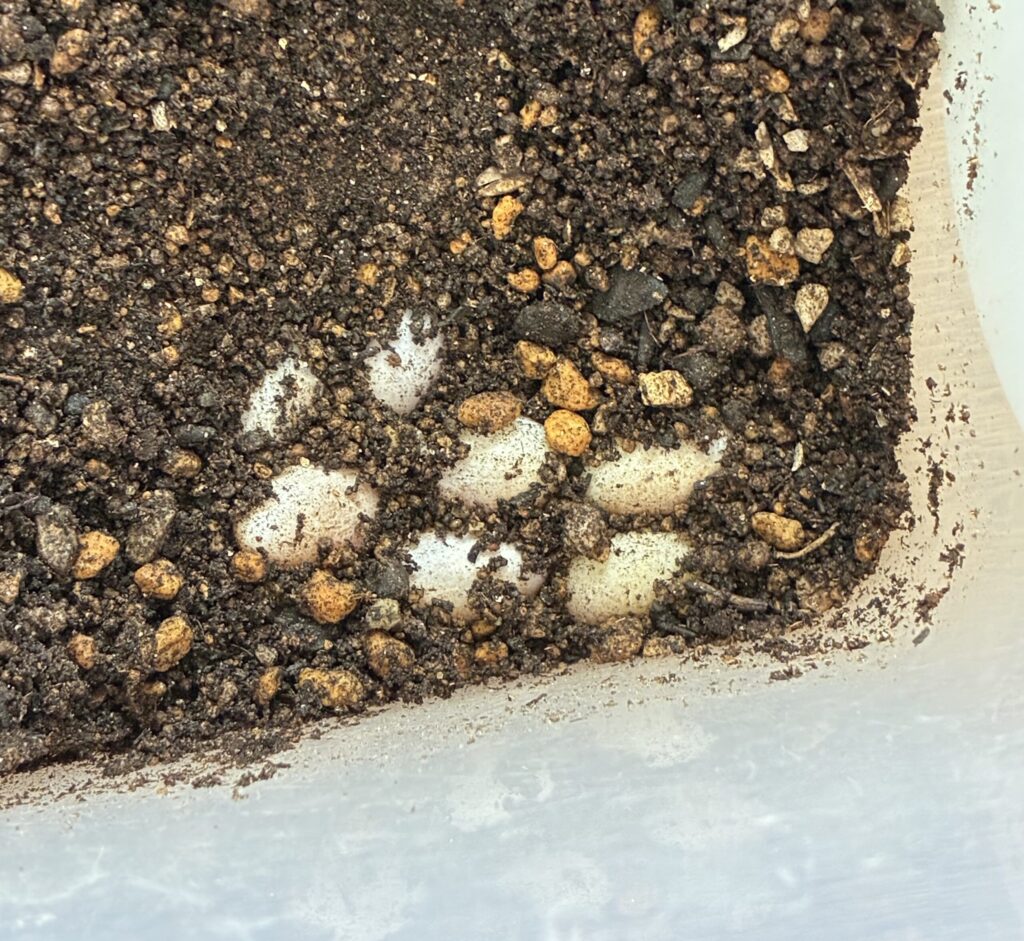
After the eggs are laid, I carefully uncover and remove them without changing their orientation.
Reptile eggs should not be unnecessarily rotated after they have been laid. I therefore handle each egg gently and place it in incubation medium in the same orientation in which it was found.
My incubation temperatures have ranged from 28 to 32°C (82–90°F). At approximately 30°C (86°F), eggs that hatched successfully did so between 45 and 50 days after being laid.
This 45–50 day incubation period is one of the results I have repeatedly confirmed in my own breeding attempts.
Under my conditions, I have not had an egg hatch after more than 50 days when it was incubated at around 30°C. This does not prove that hatching after 50 days is impossible under different conditions. Incubation duration can be affected by temperature, temperature fluctuations, and other factors.
Raising Newly Hatched Babies
I do not offer food immediately after hatching. I wait until the baby has passed its first stool before beginning regular feeding.
I initially offer very small dubia roaches appropriate for the size of the hatchling.
Young Xenagama taylori are extremely small, so hydration and access to suitably sized prey require particular attention. As the babies grow, I monitor their size and condition and separate individuals when noticeable size differences develop.
The young animals in my current group are housed individually in 300 × 200 mm (11.8 × 7.9 inch) enclosures.
Results Over the Past Two Years
During the past two years, I have hatched approximately 15 Xenagama taylori in total.
There have also been fertile eggs that did not hatch. Breeding success has not been consistent with every clutch, and I am still refining my incubation and management methods.
The results I can currently confirm are:
- Clutch size has ranged from two to seven eggs.
- Incubation temperatures have ranged from 28 to 32°C (82–90°F).
- At around 30°C (86°F), successful eggs have hatched in 45–50 days.
- Under my conditions, no egg incubated at around 30°C has hatched after day 50.
- Approximately 15 babies have hatched successfully over the past two years.
These results describe my own animals and setup. They should be considered a captive-breeding case record rather than fixed biological rules for the species.
The Most Recent Failure: Seven Eggs That Did Not Hatch
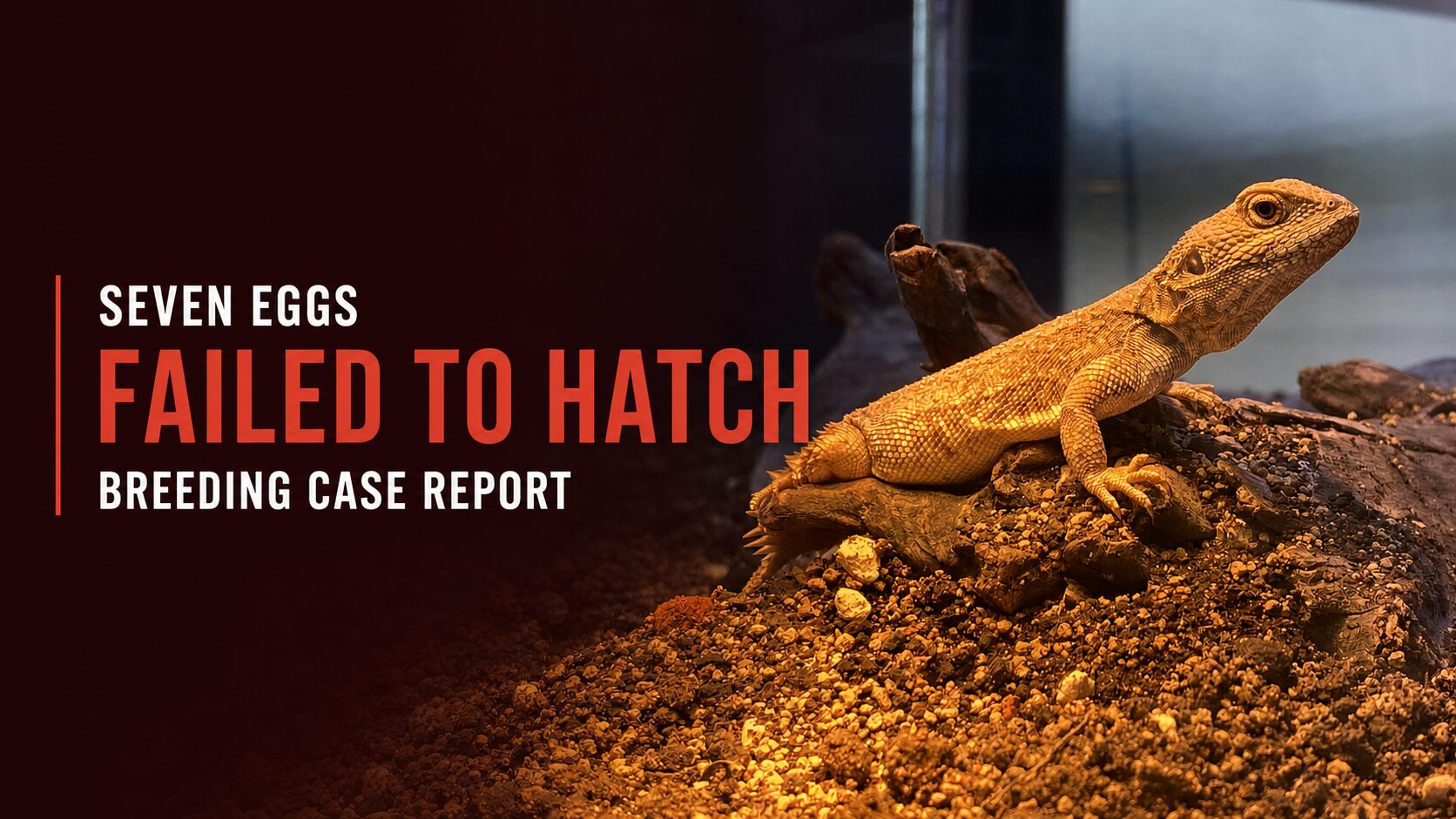
This year, I collected seven fertile eggs. Unfortunately, none of them hatched.
The embryos developed inside the eggs but died before emerging. In reptile breeding, this is sometimes described as late-stage embryonic death or “dead in shell.”
At present, I do not know why all seven embryos failed.
Possible causes may include incubation temperature, moisture levels, ventilation, changes in environmental conditions, the condition of the parent animals, or other factors. However, these are only possibilities. I do not yet have enough evidence to identify the cause.
It is important to separate what I observed from what I suspect.
Confirmed observations
- Seven fertile eggs were produced.
- Embryonic development occurred.
- None of the seven eggs hatched.
- The embryos died inside the eggs.
Not yet confirmed
- The reason the embryos died
- Whether temperature was responsible
- Whether moisture or ventilation was responsible
- Whether the failure was related to the female or the breeding group
- Whether one factor or several factors were involved
I plan to review the incubation conditions carefully before the next clutch. Until the results can be repeated and compared, I do not want to present any single explanation as the cause.
What I Have Learned So Far
My experience suggests that successful Xenagama taylori breeding depends on getting the basic conditions right and then maintaining a stable environment.
The main points in my current method are:
- Maintain a daytime temperature of approximately 28–32°C (82–90°F).
- Provide a basking spot of approximately 35°C (95°F).
- Maintain humidity at approximately 50–60%.
- Allow a nighttime temperature drop.
- Avoid unnecessary handling and enclosure disturbance.
- Monitor group-housed adults carefully.
- Watch for reduced appetite in a gravid female.
- Provide approximately 10 cm (4 inches) of moist nesting soil.
- Do not rotate eggs when transferring them.
- Incubate the eggs under stable, carefully monitored conditions.
- Expect successful hatching at around 45–50 days when incubating near 30°C (86°F), based on my experience.
- Treat incubation failures as unresolved until there is enough evidence to identify the cause.
Final Thoughts
Breeding Xenagama taylori remains a process of observation and adjustment for me.
I have successfully hatched approximately 15 babies over two years, but the recent loss of seven fertile eggs shows that successful results in previous seasons do not guarantee that every clutch will hatch.
I believe unsuccessful breeding records are worth sharing as well as successful ones. When a species is uncommon in captivity, honest records—including temperatures, incubation periods, clutch sizes and failures—may help other keepers compare their own experiences.
This article reflects my current experience and will be updated as I collect more breeding data. I would also be interested in hearing from other keepers who have bred Xenagama taylori, particularly those who have experienced late-stage embryo loss.

コメント